

The campaign to ban your pets
Positive lists – an expert panel discussion
An expert panel of pet-keeping professionals discuss the worrying proposals to introduce positive list legislation.
Positive lists are also known as whitelists, approved lists, or permitted lists, but they all do the same thing – ban thousands of suitable pet species kept by knowledgeable and responsible keepers.
Campaigns to introduce positive lists, like the Don't Pet Me campaign in Scotland, have been picked up by political parties such as the Scottish Greens and Scottish Labour.
We urge our viewers to make their feelings known.
We do not support a ban on keeping pets, and we will not support any organisation that does.
In this video, the expert panel discusses how positive lists harm animal welfare, increase illegal wildlife trade, undermine conservation projects, and damage the health and wellbeing of millions of dedicated pet keepers.
Evidence from around the world has demonstrated that positive lists cause enormous problems, and there is no evidence that positive lists deliver measurable benefits.
Here are just some of the issues a positive list will create:
All current positive lists have failed
Positive lists are unenforceable
Positive lists curtail science
Positive lists make the dispersal of husbandry and welfare best practices impossible
Positive lists send pet keeping underground
Positive lists curtail conservation efforts
Positive lists fuel illegal wildlife trade
Positive lists are incompatible with existing legislation
Positive lists are unnecessary due to existing laws
Positive lists are unnecessary as there is no evidence of a significant problem
Positive lists create poor welfare, eliminating access to vets and expertise
Positive lists will also cause poor welfare by initiating a rehoming crisis
Positive lists cause more pets to be released into the wild
Positive lists cause harm to keepers’ mental health
Positive lists cause harm to the economy, here and in other countries
Positive lists are plagued by expensive legal challenges
Positive lists raise political risks
Positive lists are an unjustified curtailment of rights
Positive lists are disproportionate and unfair.
Panel experts:
Ruth McDonald
Dr Matt Bond
Sustainable Users’ Network
CITES Sustainable Users’ Group
Visiting fellowship - University of Essex
Tony Wigley
Sustainable Users’ Network
CITES Sustainable Users’ Group
Transcript
Key: Tony Wigley / Dr Matt Bond / Ruth McDonald
What are positive lists?
A positive list is a list of animals the government permits you to keep. Any species not on the list is banned/
Positive lists are also known as
permitted lists
approved lists
whitelists
What could go wrong?
This expert panel discusses the unintended consequences of positive list regulations, including
animal welfare harm
increased illegal trade
scientific stagnation
mass non-compliance
Are positive lists bad for animal welfare?
The biggest concern I always have about positive lists is the problems that they cause for animal welfare because we know from history that every time an animal ban or a pet-keeping ban has been imposed, people will invariably ignore it. If we remember back to Norway, when Norway had an outright reptile ban started in 1977, I think it was, we know that there was a government report that said there were at least 100,000 and probably more like 110,000 reptiles being kept illegally.We know that that was happening and that was a government report.
So all of those people who were keeping illegally because they know that the ban was just ridiculous and didn't want to adhere with it, what do you think they did with their reptiles? Did they manage to visit a vet?
Well, no, of course not. So if you're driving ownership and keeping of animals underground, they're not going to be able to go to a vet, are they? And they're not going to be able to seek out that advice that currently is delivered by veterinary professionals, but also people that work in the pet industry. That first point of call, if someone's having an issue with husbandry, they're not sure, is to go to a shop. If you've got rid of all these animals in trade, people won't be able to go and seek that advice anymore.
Even beyond that, they're not able to go on something as simple as social media. We literally have people on groups at 2am to make sure that when keepers have an absolute issue that they can bob on and say, "Help, this animal's sick in this way." And we can then point them through to vets, we can point them through to knowledgeable people. We saw when the slider ban came in that all of a sudden, even though it was in many ways still legal for the people to keep them, they had it grandfathered in, all of a sudden people were afraid to ask for basic help, like, "What should I be feeding my pet? My pet's getting older, what do I need to do for it?" We've seen that in action in a small scale, and it would be horrific to see that in a large scale.
So the next question to ask is, what happens to all those animals that are now banned via a positive list that now no longer have a market or a demand for them? What happens to them? Well, the first place they go is to a rehoming center. And are the rehoming centers in a position to accommodate?
I mean, for fish, Ruth, you can say there aren't...
No, there's nothing
Yeah, there's not really the facilities there for people to rehome fish. And then, I mean, you raised the point around the sliders, a lot of the time what people will do is they're like, "Oh, well, I don't want my animal euthanised," because they obviously care about the animal they've got but they also don't want to be non-compliant acting illegally. So people will release their animals because they think, "Oh, that's my only option." So that's another risk with it.
And even if they're grandfathered in you get so many landlords and councils then going, "No, these are on a banned list. We are blanket banning them." So even if people can keep them legally, sometimes they effectively can't.
Yes, absolutely. So what we've got then is a positive list that's supposed to improve welfare, reduce the amount of species that are kept illegally, and to remove the risk of animals becoming invasive. When in actual fact, in the real world, they're causing reptile problems, they're causing a rehoming crisis, and they're causing reptiles and other animals to be released into the wild.
Or euthanised.
Or euthanised.
Which surely, how can that be a pro-welfare position?
Do positive lists work in practice?
So when we're looking at positive lists, have we got any places where they've actually worked?
No, not to my knowledge.
And it's still, it's to be human in a way is to interact with animals. We've been doing it for a hundred thousand years, we're not going to stop now.
Yeah, exactly.
And this is what we've experienced everywhere that they have been introduced. Non-compliance is absolutely rife. There is no way to remove humans from their pets and from their animals. It's proven to be unsuccessful everywhere that they've been imposed. Everywhere a positive list has been imposed, people still keep anyway.
Exactly and people have an attachment to their animals, if you suddenly say, "Oh, you're illegal now," do people stop caring about those animals? Do people start thinking, "Oh, I can't care for that animal that I've been looking after for 10 years?" And I think equally as well, if you think about cases in Europe or what's being proposed in Scotland, those borders are leaky. Anyone can bring an animal in. And if other countries aren't enforcing this rule, people understandably look to other countries and be like, "Well, why do I have to follow that rule?" When those countries seem to be getting along fine.
Intelligent people everywhere ignore stupid laws. We know this to be a fact. And I can't even think of one country that's imposed a positive list where they've been able to demonstrate a benefit or an improvement in their addressing the issues that they purport to address. They simply can't show any benefit. It's just a restriction on animal keeping. That's the entire remit for that rule.
And in all these examples, you find that non-compliance is rife and they're often subject to legal challenge too, right?
Yeah. Expensive legal challenges.
One of the first rules of a law, any law, is that it's got to be precise, it's got to be enforceable, and it's got to be reasonable.
Proportionate, yeah.
And I can't see a positive list coming in and taking hobbies that myself, yourself, yourself, we've spent decades on it. There's millions of us keepers out there who our entire identities in some ways are bound up by these little things that require hours of work, research, learning, and someone's just going to come in and go, "I know you've spent your whole life on that, not anymore."
Well, we've got keepers, reptile keepers in Belgium where there's a positive list and also in the Netherlands where there's positive lists. In fact, in the Netherlands, it's not a reptile positive list, it's a mammal positive list. But we've got keepers who have absolutely put their head above the parapet and said to the government, "I have these animals that are supposedly banned. What are you going to do about it? Please come and prosecute me. I would love to go to court." And in those countries, the government simply haven't reacted. They don't have the enforcement powers, they don't have the enforcement knowledge, and they don't have the enforcement resources. So it's pretty arbitrary really. But that's not to say it doesn't restrict animal keeping because most people don't want to break the law.
Yeah, exactly. And also, there are fundamental rights that could be invoked in the event of a legal challenge like that. There are fundamental rights to property, which are enshrined in law. Those things don't change. So if someone does stick their head above a parapet and goes, "All right, take me to court then," the government can't be certain it's going to win.
Absolutely. And the biggest issue here is I don't think governments and policymakers have any idea of the size and the scope of keepers particularly with fish, but also with reptiles. And was it you I was speaking to about the number of households or the number of people who keep fish?
So yeah, latest stats say that it's somewhere between 13 and 20% of households in the UK keep fish.
And with reptiles, we have numbers round about 8.8 million reptiles and amphibians. So this isn't a niche hobby. This isn't a niche community. There's a lot of people who will be very upset. And we know from our medias that people are really not happy about these proposals. And that goes for everywhere in the world that it's been proposed. I mean, Scotland's our biggest issue at the moment, isn't it really with the Don't Pet Me campaign. I'm pretty sure the Scottish government need to know exactly who will be against this and who they will be facing if they go forward with this proposal.
Because it is a minority of people that are pushing it. That's one thing to remember. If you ask the average person on the street, do you think pet keeping should be banned? The answer is probably going to be no.
Why we should support responsible pet keeping.
Pet keeping is good for people. We've established that and the science backs that up as well. So we know that there are mental health benefits of pet keeping, both in terms of stress reduction, that kind of thing. And that also translates as well to benefits for the health service, the NHS. We know that pet keeping does create savings for the NHS because people are less stressed.
And also people get less sick when they have pets. I'm not sure exactly what the science is behind that. We've seen fewer people get cancer, fewer people get colds, fewer people get all kinds of illnesses. That's been well documented.
So what other benefits are there of pet keeping?
Well, the benefits of pet keeping, tonnes. I can run you off a list. Let's see if I can remember all of them. I mean, just from a personal, on a personal level, a reptile or a fish doesn't need walking three times a day. You're very unlikely to be allergic to a reptile. They're not going to bark and annoy all your neighbours. They're not going to leave hair or dander or pee all over your house and ruin your landlord's deposit. They can live in relatively small spaces compared with other animals like horses or dogs or cats. They're not going to bite the postman. They're not going to escape into your garden and kill the local wildlife. These are all the benefits and the reasons why reptiles and fish have become really popular pets nowadays. And believe it or not, reptiles are certainly interactive and affectionate in their own way. I couldn't say for fish, of course, but people do have relationships with these animals. So these are all the benefits of reptile keeping and fish keeping that shouldn't be overlooked. If you want to impose a ban, you would need to negate the problems that it causes.
Of course. I mean, you can probably talk to like some of the benefits that, you know, that human animal relationship with fish, right?
All the time. I mean, if anyone's followed me online, they might have known about Sam, my Oscar and Sam, he could recognise people. He had favorite toys. I had a relationship with him. I had a relationship with him.
Neurodivergence in animal keeping communities.
Now I'm neurodivergent, so I've got ADHD and plenty of people I know within the fish keeping community are also like that.
Sorry to interrupt, what benefits does fish keeping bring to you in in that respect?
So to give you an extreme example, if I get stressed about something, I can be an immense pain. I can be so restless that I'll get angry. I'll get upset with people, or I can go do a water change and make things calm and controlled again, get things right for my animals. And that one little focus in my life, I do the research, I know where I'm going. I get that correct. That then brings it back to all other aspects of my life.
And the hyper focus, the hyper focus and attention to detail of neurodivergent people. And I'll say this as somebody who's not particularly neurodivergent. But my understanding is those traits that are often applicable to neurodivergence make people good keepers. And this is why it was so upsetting to the neurodivergent community when the SSPCA, Born Free, One Kind, Don't Pet Me campaign came out, listed all the reasons why people shouldn't keep reptiles and listing welfare as a major consideration. And then went on to discuss the issues of neurodivergence and low income families in the same document insinuating that these were markers for poor keeping. It was very badly received. And you can understand why.
I mean, it's frankly insulting to huge swathes of the population. And the idea that being low income or being neurodivergent means that you're less able to deliver welfare is just frankly insulting.
What were they thinking?
Yeah, there's documented benefits of access to nature for people's mental health. And increasingly, we live in very urban, people live in very urbanised environments, live in smaller spaces, you have a lot of houses that are chopped into smaller rentals, that kind of thing.
A lot of screen time.
A lot of screen time, exactly. That access to a little slice of nature, you know, that can be in a park, that can be a slice of nature in the home, and it brings you peace, right? Like the amount of I bet it brings you loads of peace maintenance on your tank. It certainly does for me.
And one of the things we also know, we've got plenty of people in the group are in wheelchairs, maybe, and genuinely struggle to access the outdoors. One of my admins, she's in a wheelchair due to mobility issues, she can't leave her house right now.
Pet bans silence science
One of the things that really, really frustrates me about positive lists is the way that they would be so bad for science, because I think it's worth recognising that pretty much all of the advancements in welfare, husbandry, breeding, and even conservation to a great degree, have come from private keepers. It's not from zoos. It's not from researchers. It's from private keepers. And this is true of all species, all small species, rather. So when it comes to elephants or giraffes, of course, that's that zoo and in situ conservation work. But when you've come to small species that people can easily keep at home, it's the private keepers who have the passion and the resources to do that work. And even the work that zoos and conservationists in situ do, those people doing that work started as private keepers.
Of course.
So if you stop private keepers from keeping these animals, you will significantly curtail the science. And how can that possibly be a good thing?
Exactly. And I think when you think about like zoos need technological advancements, right, in order to keep their animals better. But what drives that innovation in technology is the private keeping sector. Zoos are going to need pumps and lights and enclosures and like heating elements, that kind of thing. In the same way that a private keeper would. If you got rid of that market, the need for that technological advancement slips away.
Yeah.
So damaging that is going to damage conservation efforts made by zoos as well.
You've also got the little brown job effect for fish and reptiles. Where you have the most boring animal you can imagine. I love them.
They're not boring to us.
No zoo is going to keep them because everyone is going to look at them and go boring. And yet we're the ones holding the conservation colonies, breeding them, sourcing out which are most likely to go into the wild, we're the ones referencing back to the zoos, how often do you see someone say this is a world first, a zoo has bred X.
And invariably when the zoo say that, we say, well we did that 20 years ago in the private sector. And we need those nerds. We need those really passionate nerdy people who focus in on a particular species that excites them because they're not going to make good public displays. They're not going to make good zoo exhibits. So we need those nerds doing that work and if you stop nerds from keeping animals, that work simply won't be done.
And you're losing out on conservation benefits as well. So I mean, from what one example is, zebra plecos, zebra plecos a lot of those are bred in Indonesia. Every time you're buying zebra plecos, there is a breeder in Indonesia who's giving money back to in situ conservation in the natural habit.
Caring for that environment.
And there's other conservation benefits of wild fish collection as well.
So one thing we're hearing over and over again is that we're ripping these animals from the wild and we're decimating populations, except, I mean, Project Piaba is always going to be my example I come down to because they've tracked for decades now they've looked at the numbers and those fish species in the areas where wild caught fish are being taken from. The numbers of those species are increasing in some cases, they're all holding steady at worst. And this is while climate crisis is going on. We were at a talk recently, weren't we? And they showed areas where the wild caught was no longer being taken, because people have been convinced that wild caught is bad. And the decimation was heartbreaking. Lush forests now chopped down.
Do you know, and this I think explains the difference between those campaigning for positive lists and those of us who are living the actual life and understand the nuances and the details of the different conversations you can need to have if you want to talk about captive breeding, conservation, illegal wildlife trade, all of these are nuanced conversations that require far more delicate and detailed solutions than just a heavy-handed blunt positive list.
Exactly. And I think, you know, people talk about like ethics, right? And ethics are always very subjective. And they say, "Oh, wild collection shouldn't happen because it's not ethical." I would say, in counter to that, is it ethical to take away the livelihood of some of the most vulnerable people in the world for the sake of a measure which won't even necessarily deliver better welfare for those animals? A lot of these animals will only live, particularly in Brazil, where it's a boom and bust cycle of the flooding in the waterways. A lot of these those animals won't live beyond a year anyway, but a wild caught cardinal tetra will live for multiple years in captivity. Whereas in the wild, that animal would have been predated on when all the waters were dropped.
And the last point to make about that, people often view the wild in Disney like, you know, distortions, thinking it's a wonderful place where everything lives wonderfully and lives out a full and happy life. And the wild simply isn't like that. There are many perils in the wild. And it could be very strongly argued that life in human care is far preferable for many animals than life in the wild.
Exactly. You keep an animal in an environment which you intend to be optimal. That animal never is competing for food because you're managing the food intake. The environment is always optimal because…
It doesn't get predated on.
It doesn't get predated on and it also hasn't got, you know, pollution being washed in. That kind of thing.
We talk about sort of conservation things and it almost sounds like a fairy tale, but you can literally see these pools drying up and fishermen go in and before the animals die, due to the water going away, they collect them, they carefully transport them to Manaus. They then get put onto planes, flown to the UK and at every stage, local people are being paid. The alternative is they chop the forest down and they mine for gold or they grow crops and they literally destroy an area that's described as the lungs of the planet. And at the end, I, you, Matt here, your industry that you represent is providing that money, which is providing the conservation.
Do we need more pet-keeping regulations?
I've read so much over the last few weeks that this is an unregulated, un-legislated area. And I'm sitting there, it's been what, 10 years going on that I've been attending various government meetings, sitting on various bodies. I'm reasonably sure I've seen rafts of legislation that's both new and existing. What's your guys thoughts on that?
I mean, it is ridiculous to say that the pet trade is unregulated. This is, it is a complete fabrication which comes out in many different sources. And for welfare alone, you've got, there's welfare checks on animals at the border when they arrive. You've got welfare and transport, which is regulated and you've also got welfare regulated by the licensing of activities involving animals regulations.
Liar.
Liar for sure. We'll stick with that for now. And people talk about how you acquire pets. If you compare pet shops where you get, where most of us would get a reptile or an amphibian or a fish, those pet shops are licensed. They're inspected. You have provision of care information. Staff are required to have some level of training as well as part of their licensing regime. If you compare that to cats and dogs. If it's under three litters a year, there's no licensing involved. It's unobservable. Anyone can go on Pets4Homes get in contact with someone and go and pick up a cat or a dog.
And we're not saying that dog and cat breeders are bad per se, but the likelihood and the possibility and the potential for bad actors is far greater there than it is in pet stores.
Absolutely. And I think that provision of care information that's required as part of a pet sale in a pet shop is real crucial in terms of making sure that people are educated and I think one of the things that we've been calling for is rather than having pet bans, let's focus on actually improving, demonstrably improving welfare through keeper education. That's why we've got things like Pet Know How, for instance.
Yes. Very good point. You should explain what Pet Know How is of course.
So the idea of Pet Know How is that you have a repository of care information for many species that are commonly kept and you look at the care information that's there and then you would undertake a test online. It's a 100% pass rate, so you have to go through all the questions and to show that you have digested that care information. Once you've passed that, it will give you a PDF certificate, which you can show to your local pet shop and say, "I have done my due diligence. I've gone away and I've researched this species." And that allows keepers to be educated and also it gives pet shops the confidence they need to know that this animal is going into the home where their welfare needs are going to be met.
Which is part of their licensing regulations as well, isn't it?
Exactly.
It's always been flabbergasting to me that people who are advocating for positive lists say that it will help the problems with welfare and help the problems with invasive species and help the problems with human safety animal attacks. We know that these three things do exist. They do happen, but the prevalence of them in reptile keeping and fish keeping especially, is a fish not the safest pet you can keep?
I would say so. That animal is highly unlikely to damage you.
To cause you any harm. We already have regulations to govern all of those three areas creating a positive list isn't going to make those things more illegal. It's just going to stop people keeping the animals. And that is indeed the goal of the campaign groups that are pushing for positive lists. You can't make it more illegal. I think what we need more of is more effort in enforcement and more effort in education rather than more regulations that stop people keeping pets. Because what those overbearing regulations do is they don't discern between good keepers and bad keepers. They just punish everybody the same. That's simply not fair or proportionate.
One thing I'll say is pet sales are out in the open. If I go into a shop and I see a problem, I have a route to report that. I can go to my local council and ask for who their enforcement officer is If they're an OATA member, I can contact OATA and say, "I've seen something I didn't like." I can also walk up to the person behind the till and say, "Really?" Once you put that behind closed doors, that goes away.
All of that accountability goes away. And I don't think in the days of today where social media is so prevalent, I don't think pet stores or bad actors are particularly worried about local authorities or the RSPCA. What they're worried about is us, their peers, finding out what they're doing wrong and outing them. That is their major concern. and so the accountability of our community is so high. I don't think, although there are people out there that throw bad keepers under the bus or even throw new keepers under the bus, what there is is a large community of people who are just willing to help those keepers raise their standards and this brings me on to an important point that I'm very passionate about, is the self-regulatory nature of our industry and our community. There have been countless examples where there have been bad practices of old or less favorable practices of old that have been completely changed because the industry wants to self-regulate.
We always get framed as the bad guys, the exploitative, the money hungry the pet keepers who are abusing, the pet keepers who are abusing, What we are is a community of passionate, committed, animal-centric, welfare-centric people who want the best for our animals. so of course, we're pioneering new keeping. Of course, we're pioneering new husbandry. Of course, we're self-regulating We've seen it with tank busters, was it?
Yes, the tank busters campaign. It's been going around now for decades It's educating keepers on how big some of those cute little fish can get.
And maybe don't sell them to new keepers.
Don't sell them at all in many cases. I can give you a reptile example Spider morphs in ball pythons. Shops now are self-regulating and they won't sell those. Breeders are self-regulating and not breeding them.
Ultimately, what we're saying here is that let's improve what we've got. We can all point to parts of the regulation that we think, "Oh, that doesn't quite work for fish or that doesn't quite work for reptiles," that kind of thing. Or “We'd like to see these welfare improvements a bit more.” We can achieve that through self-regulation or lobby of government, that kind of thing. Bans don't improve welfare. Let's improve what we've got. Let's educate people more. Let's improve what we've got. Let's not ban things.
I think a positive list is to throw the baby out with the bathwater. Yes, we know there are issues. We can work with education and enforcement to reduce these issues, but to throw responsible keepers who are doing such good work under the bus as well, I don't think it's a good option.
Don’t Pet Me – Scotland’s proposal to ban pet-keeping.
The call for positive list isn't a new one by any means. We know that it's been pushed a lot, widely in Europe, it's been pushed by anti-keeping groups around the world. Here in the UK, the Don't Pet Me campaign, which has been pushed in Scotland, that is the latest call, isn't it, that we're facing for positive lists?
This has been a particular worry for us because we kind of expect the extreme animal restriction and anti-pet keeping groups such as One Kind and Born Free to be pushing positive lists because we know that they want to stop people keeping pets. What we were very surprised about was the involvement of the Scottish SPCA in that campaign because previously the SSPCA has been very supportive of responsible pet keeping and responsible welfare. For them to join forces with such an extreme ideology was quite a concern for us and I think that's something that we've all felt a bit surprised about.
There were a lot of issues with the report as well, wasn't there?
Oh, there was. But just to point something out, we're not just three people sitting around talking to social media here. We are all on the steering committee for the companion animal sector council, which is the advisory body for the government and the devolved governments.
On animal welfare.
On animal welfare. That's our day to day things. We run three real world groups where we are campaigning every single day. And I think one thing that comes across for my members, I often get people saying, "Oh, you're just making stuff up. It'll never happen."
The Chicken Licken, the sky's falling in principle.
It's the sky is falling in thing, except this is really happening.
And a key example of how keeping groups and industry groups not being involved in those conversations leading to poor outcomes is the Don't Pet Me report. We were not consulted as groups. They didn't consult keeping organisations or industry organisations to understand what our views were. And perhaps we could have actually lent a bit of expertise, done a bit of education ourselves.
I find this to be a abhorrent in fact and it's something that really, really frustrates me because if you ask most of the people on the committees that came up with the Don't Pet Me campaign or the SAWC report, the Scottish Animal Welfare Commission, None of these people have any real experience of working with these animals. If you ask them, "Do you know what a Ferguson zone is? Do you know the temperature range for this particular fish? Do you know about infrared heating? Do you know what the calcium to phosphorus ratio for herbivore is?" They can't answer. And yet they're telling people what they think should happen with these animals and pet keepers. And when we do input our knowledge, which has happened worldwide, I'd like to say that the issue in Scotland and indeed the issue in the UK is not unique. As you well know, we're a worldwide organisation and we see this thing, this frustrating thing happen time after time after time. And what happens is they consult with the keepers, they consult with the specialist vets and then completely ignore their input and make proposals that make no sense to anybody who actually knows what they're talking about.
Paying lip service to engagement.
That's right. And then there'll be some kind of... Did you come to the EU Commission conversation about curtailing illegal trade, which ended up being a curtailment of all exotic pet trade?
Yes. And that was a classic example of they had a predetermined outcome and regardless of what the evidence said, they were going to make their report fit it regardless.
And they still said that they consulted with us, of course, when really they just simply ignored us. I remember we did some work with the Swedish who had what's called the L80 proposal. And the L80 proposal consulted with a lot of keepers and a lot of breeders and a lot of vets, specialist vets who know what they're talking about. And we spoke to one of our friends who's a vet over there, a guy called Jesper, and he was involved in the consultation and they completely ignored him. And in the end, they came out with a proposal that said you couldn't interact with your nocturnal reptiles during the daytime, which is just craziness and you couldn't feed bugs to reptiles, which is just craziness. And the sizes of the enclosures that they were proposing were a minimum size standard nobody would have been able to accommodate, not even my nerdy friend Jesper, whose turtle enclosures are enormous. Those enclosures wouldn't have been big enough.
And probably more space than most zoos can actually provide.
Exactly that. And that's not to say that more space couldn't be better, but space isn't the number one consideration. Enrichment is probably a more important consideration. What I'm trying to say is that if they're going to ignore consultation from people who actually know what they're talking about, then can we have any faith in the proposals that are so extreme that they would stop most keepers from keeping and curtail and stop the keepers who really know what they're talking about? I can have no faith in it.
And that report was awful. I'm talking about someone who's been 16 years in academia and the report was awful. There was no science in there.
They have come to it with the view of, "Okay, we want to ban all these pet species. This is our predetermined outcome. We're going to go in and we're going to cherry pick things which will fit our predetermined outcome." And cherry picking is not the basis of good evidence.
I mean, three things that we've pulled out that they were concerned about. They were concerned about the low income, people having low incomes and still keeping animals.
Poor people shouldn't have pets apparently.
Yes. But more importantly, if an animal is being mistreated, that is wrong.
Deal with that.
Deal with that. But if a person is below average income and is maybe not going to cinema, but is buying their fish a new posh food or something like that. Why should that be curtailed?
Exactly. Curtaling good keepers is not a good idea.
They didn't like neurodivergent people having, and it felt a bit like the disabled shall not be allowed to keep animals. Despite the fact that, I mean, there were some studies that show that you have a higher incidence of neurodivergence amongst PhDs. So yeah, it's not intelligence is linked to that sort of thing. And then the third one, I still haven't quite figured out. They were concerned that there were many younger defined as being under 45, first time pet keepers.
Yeah, exactly. Under 45 threw me, but also because having your first pet is linear to your second pet and your third pet, obviously you're going to be younger when you have it. But the under 45 made me go, I write books on this subject and you're saying I'm too young to have a new pet.
Exactly.
So what is it really that we want people watching this to do when it comes to Don't Pet Me? Well, how can they help with this particular campaign if they don't want their pets banned?
Let me give you a handful of things that I'd do immediately. The first thing I'd do, if I was a pet keeper and especially a pet keeper in Scotland, is I would write to the SSPCA and say, "If you would like me to continue donating to your organisation, I would drop the idea of a positive list." I think that for a pet keeping organisation that relies on the support of pet keepers, maybe that's a bad idea. The second thing, we're all pushing the change.org petition that is a petition against positive lists so please sign that. it will take you 30 seconds. There's a lot of content on all of our web pages to tell you what exactly a positive list is and why it's a problem.
Yeah. I think on that petition point, if we get to a point where we need to start having conversations with officials as part of our work, officials and politicians, we need to be able to demonstrate that people care about this and the petition really helps us do that.
Absolutely.
The Don't Pet Me campaign has its own petition. We want to be able to beat that and say, all these pet keepers are going to be affected by this and they don't want this. Having those numbers really helps us.
Absolutely. Very important.
And I'd also like to add that I'm sure somewhere around this video, there will be ways you can follow our different organisations so that you can keep up with the news about what's going on.
Of course.
I think if you're in Scotland as well, both Scottish Greens and Scottish Labour have come out in favor of restricting the number of exotic pet keepers, exotic pet species that you can keep. So if you see those local representatives, take them to task on it.
Yes, for sure.
Ask them what the justification is and tell them how it will affect you. I think that is absolutely crucial.
Because crucially, the exotic pets that are mentioned in this report, they're not the wild animals. We're not talking about rare species of things taken from distant forests. We're talking about cherry shrimp.
Yeah. Bearded dragons, Leopard geckos.
Things that have been captive bred for decades.
Commonly kept easy to keep species that bring joy to millions of people.
Exactly.
To the point that some of them are so domesticated that their genome has changed. One of the main fish they're using on the photos is a Betta fish. It's been in captivity so long now that actually it's got a massive genetic difference to its wild-caught counterparts.
Find out more about positive lists
-
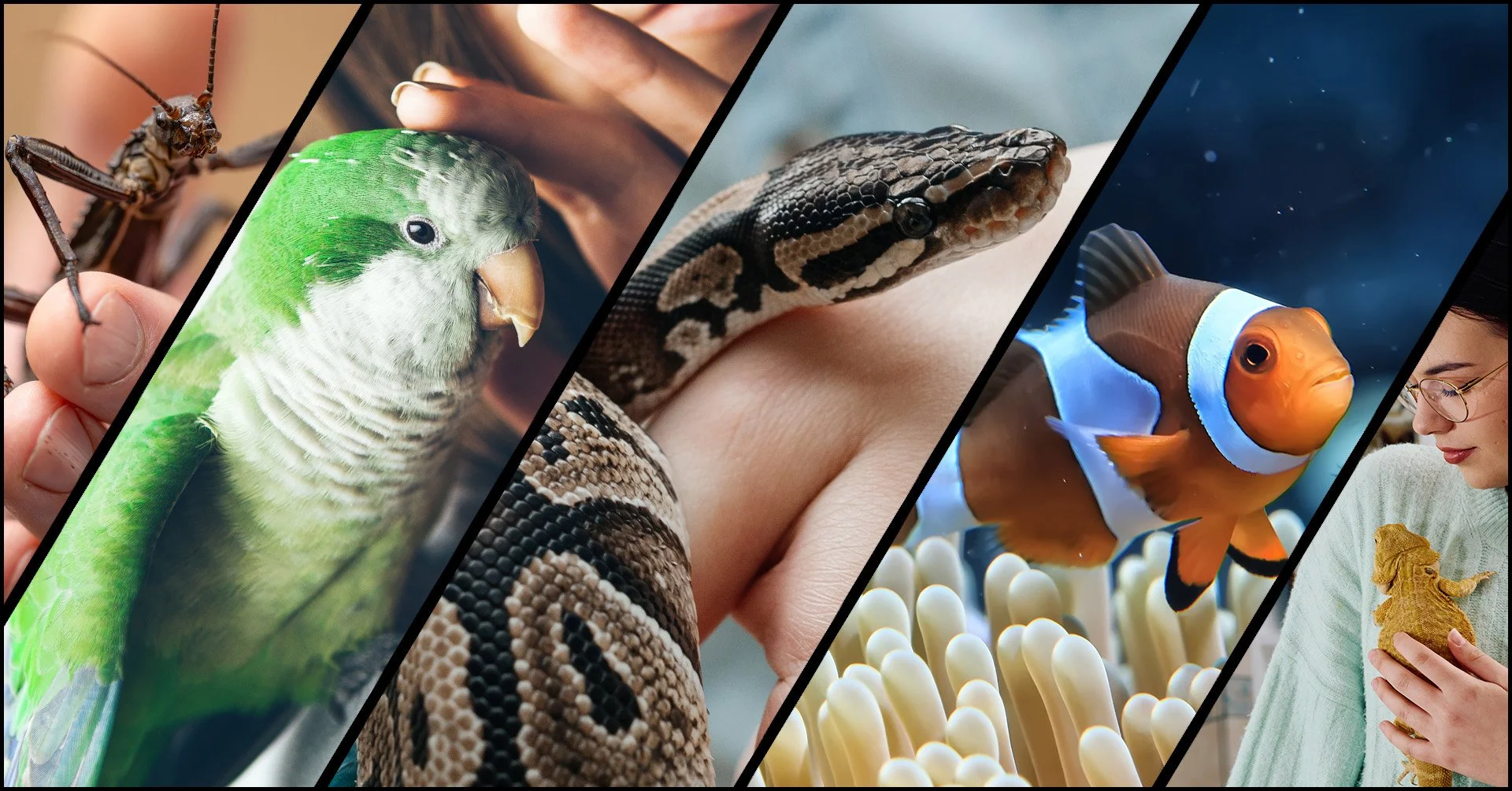
![Composite thumbnail showing a stick insect on a hand, monk parakeet on a woman’s shoulder, clownfish in anemone and woman holding a bearded dragon, representing pet species affected by proposed positive lists]()
Don’t Pet Me: A campaign to ban your pets
-
![Black and white montage of snakes, birds, mammals, amphibians, and invertebrates. Text reads "DON'T PET ME" with subtitle "A documentary film by Responsible Reptile Keeping Worldwide". Includes the Responsible Reptile Keeping Worldwide logo.]()
Don't Pet Me – what would you do if your pets were banned?
-
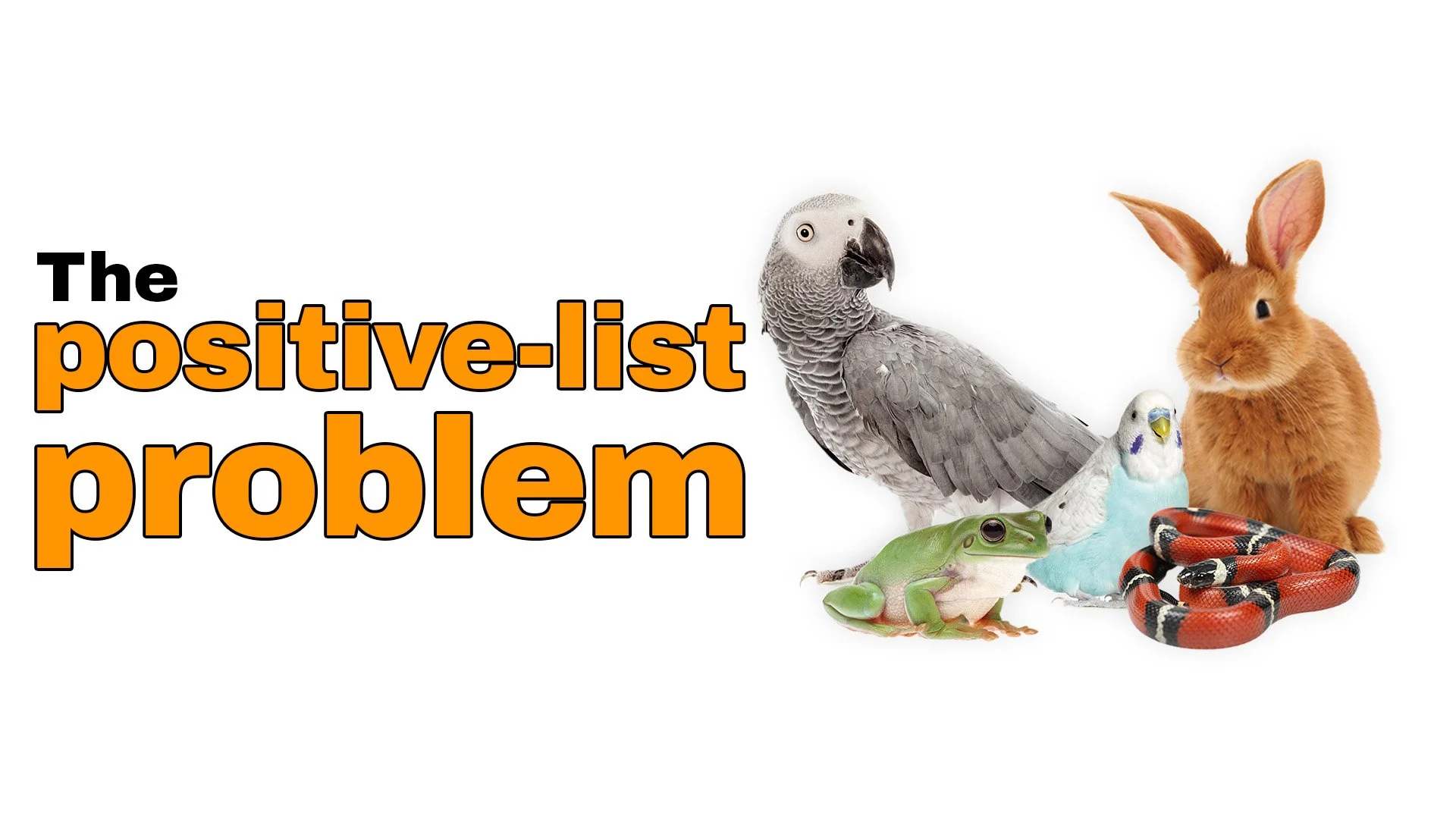
![Banner image for 'The Positive-List Problem' article showing the title over images of a parrot, frog, budgie, snake and rabbit, representing commonly kept exotic and companion animals discussed in the critique of restrictive positive-list legislation]()
The positive-list problem
-
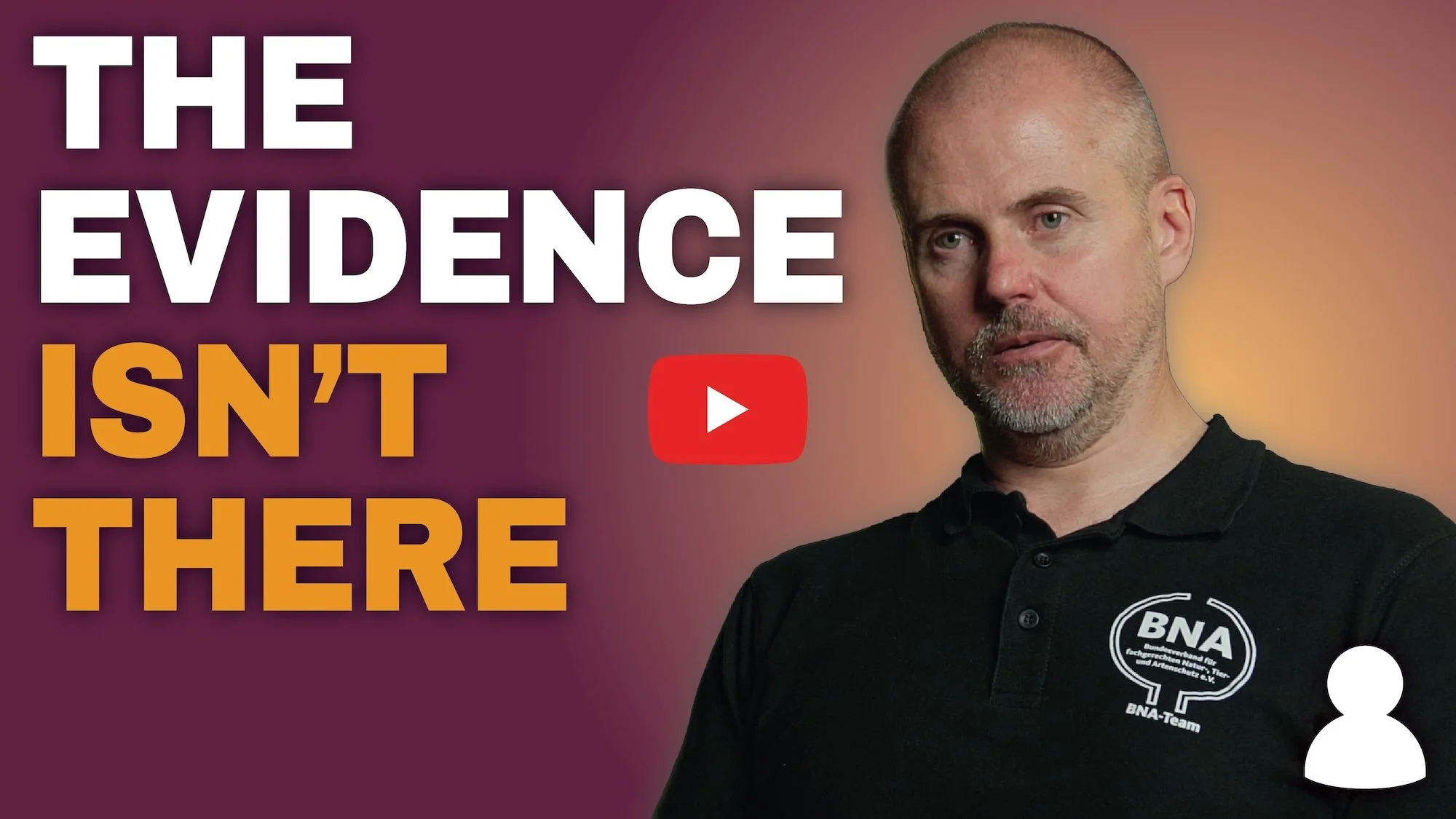
![Thumbnail text reads “The evidence isn’t there”; image shows Dr Martin Singheiser of BNA, emphasising species conservation and responsible animal husbandry.]()
The evidence for positive lists isn't there
-
![Text on thumbnail: “Whitelists and positive lists don’t work” and “The truth”; image of a gecko with “BANNED” in stamp-style lettering.]()
WHITELISTS AND POSITIVE LISTS | How government will ban reptile keeping
-
![Thumbnail text reads “Norway’s reptile ban” with the subtitle “A dangerous déjà vu”; image shows a lizard alongside a Norwegian flag.]()
Banning reptiles doesn't work | Norway case study
-
![Shady tactics revealed – a turtle and a sugar glider look up at a European Union flag, illustrating the video about how positive lists and whitelists threaten responsible pet ownership.]()
Positive lists and whitelists: they want to ban your pets
-
![Thumbnail text reads “Whitelists don’t work” with a “FACT” stamp; image shows Svein Fosså of NZB being interviewed.]()
Reptile whitelists haven't worked in Norway
-
![Video thumbnail showing Tony Wigley discussing threats to reptile keeping, with on-screen text reading “Reptile keepers under attack” and “Positive lists failed”, alongside flags of multiple countries.]()
Reptile keepers are under attack!
-
![Thumbnail text reads “Ball pythons banned”; image shows a ball python and the interviewee wearing headphones.]()
Ball pythons banned – worse to come
-
![Protester holding a megaphone, symbolising activist pressure and the use of loud campaigning tactics discussed in the animal welfare debate]()
Silencing the experts: How extremists are twisting the animal welfare debate
-
![Child holding a bearded dragon, illustrating responsible reptile keeping and handling]()
The last reptile keepers? Positive lists don't work
-
![Djungarian hamster (Phodopus sungorus) on white background, one of the animals discussed in the article about flawed science and pet policy]()
Bad science and shady politics