
Responsible Reptile Keeping 2025 in review
What a year!
Every year, RRK has the same goal: for you to enjoy your reptiles. Our mission in 2025 was entirely driven by that simple yet important purpose.
Looking back over the last twelve months, it is astonishing how busy we have been, and how much we've accomplished in that time. We're enormously proud of the RRK team, who have worked relentlessly – often under pressure – to protect and support the future of responsible reptile keeping.
Here’s what we’ve been up to.
Policy and lobbying
RRK is proud to be active in welfare committees, government working groups and pet-trade organisations worldwide:
International Pet Advocacy Council (IPAC)
CITES Sustainable Users’ Group (CSUG)
We attended a raft of meetings throughout 2025, discussing issues such as the scope of invasive species pathways, reptile-expo legislation and guidelines, regulating rehoming centres, the UK’s contribution to CITES CoP20 in Uzbekistan, animal-keeping regulations, and supporting responsible pet ownership projects, such as Pet Know How – a digital information resource that launched late in 2025. The project aims to prevent impulse purchases while also helping responsible pet businesses. Do check it out if you haven’t seen it yet.
Scandinavia
Our lobbying and advisory work also extended worldwide, collaborating with our Swedish partners ZOORF to oppose absurd legislation. The L80 proposal aimed to make it illegal to feed insects to pets, and nocturnal species could not be maintained during the day, along with other unnecessary and ill-advised regulations. Our interview with Jesper Agner Arnö, one of the veterinarians involved in the consultation process, highlighted how input from pet-care specialists and veterinarians was ignored – a phenomenon we see all too regularly in government-funded research projects. Thankfully, the proposal was subsequently withdrawn by the Swedish Government, following a widespread national outcry. It is currently under revision.
Sweden’s neighbours in Norway are no strangers to absurd animal-keeping legislation. Norwegians endured a complete ban on reptile keeping from 1977 to 2017, before a severely restrictive positive list of just 17 species was introduced. It is well established that more than 100,000 reptiles were kept as pets during the ban, and similar levels of non-compliance are likely occurring under the current positive list.
So it came as a surprise when pet-care specialists heard about a plan to reintroduce the reptile ban to Norway, sparking an information and education campaign spearheaded by pet advocacy organisation NZB, the Norwegian Herpetological Society and media from RRK. In collaboration with NZB, we produced a series of short videos along with printed content, highlighting the issues caused by pet-keeping bans and urging the Norwegian Government to heed the lessons from their history. The campaign seems to have gone quiet, for now at least.
It appears policymakers are keen to avoid being publicly held to account when developing unsuitable legislation.


Scotland: Don’t Pet Me positive-list campaign
The Scottish SPCA is the nation's largest animal welfare charity. It has historically enjoyed broad respect among animal-care specialists, having worked alongside professionals, experts, and responsible pet keepers for decades. So, it came as a shock when the Scottish SPCA voiced support for the Don’t Pet Me campaign, which calls for a restrictive positive list in Scotland.
The proposal is being driven by well-known radical animal-rights groups such as OneKind and Born Free, but most controversially, by the Scottish SPCA itself.
Worryingly, the Don’t Pet Me campaign also places people of low socio-economic status, and individuals with neurodivergence or poor mental health, alongside accusations of poor animal welfare – a framing that many consider baseless and grossly unfair.
RRK has produced a documentary film exposing the failings of positive lists, the harms they cause and the disingenuous nature of animal-rights campaigns that call for pet-keeping bans under the illusion of improving welfare.
Many specialists consider the Scottish SPCA’s call for a positive list to be a misstep in the organisation's otherwise evidence-based and pragmatic approach, and we hope the documentary will motivate it to reconsider the more practical options and solutions outlined in the film.
Positive-list campaign rebuttal
Eurogroup for Animals is one of the largest, well-connected and well-funded animal-rights campaign groups in the world. It is pressuring the European Parliament and Commission to introduce an EU-wide pet-keeping positive list that would ban thousands of animal species.
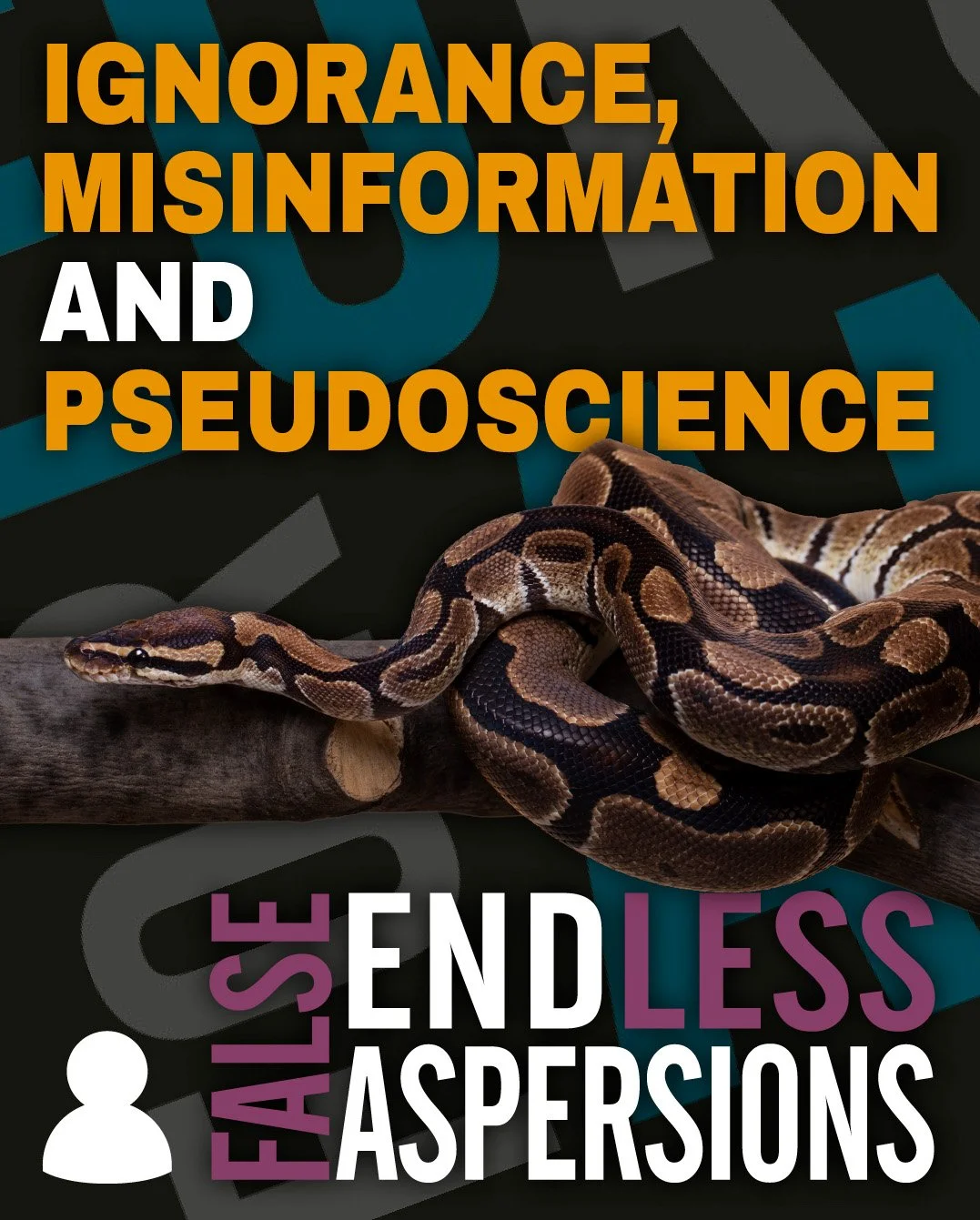
The arguments in its presentation were, unsurprisingly, littered with misinformation and rhetoric. Our rebuttal video dismantled those claims and presented facts and evidence, with RRK's founder, Tony Wigley, responding directly to Eurogroup's presenter. The film exposes the campaign group's striking lack of subject knowledge, and it could be almost amusing were the subject matter not so serious.

EU Commission
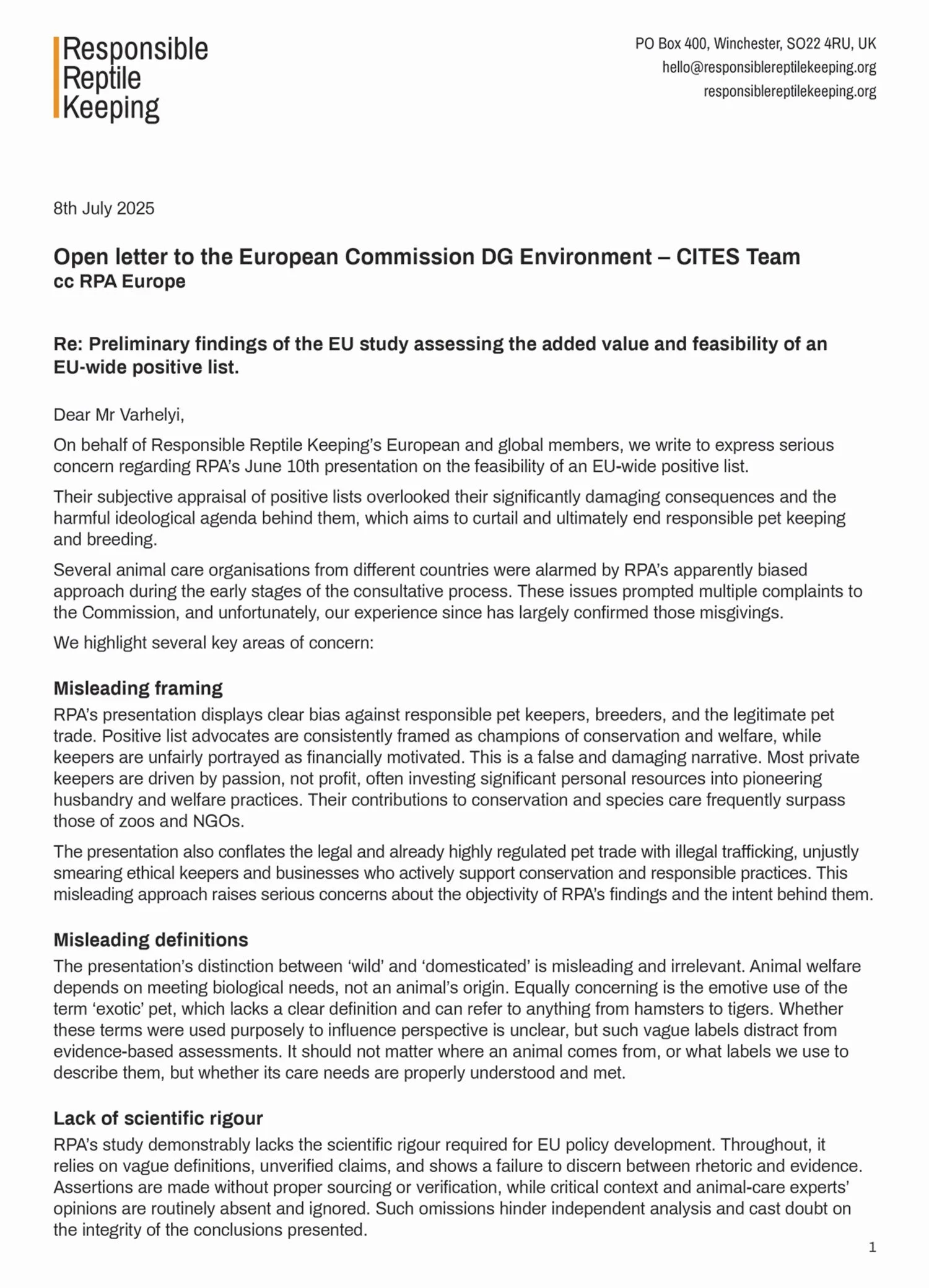
An evaluation commissioned by the European Union to assess a potential EU-wide positive list progressed to the publication of an interim report. This raised serious concerns among the pet-care advocacy organisations that attended the presentation, and it prompted numerous responses highlighting the failures of positive-list approaches and the significant flaws in the report’s methodology. RRK submitted a 30,000-word, line-by-line rebuttal to the consultants and delivered an open letter to the European Commission, setting out the contraindications of positive-list policies.
These submissions were followed by an equally detailed appraisal of the literature used to compile the report. With support from animal-care organisations across the EU, RRK curated and compiled a comprehensive review of the cited sources, highlighting widespread bias and data cherry-picking. It was then translated into several European languages.
The campaign represented a milestone in international pet-keeping advocacy and lobbying, and we’d like to thank our EU colleagues, ZOORF, PVH, REPTA, SUN, The Hawk Board, Raptor Breeders, NZB, OATA and EPO for their vital collaboration.
USA
RRK recruited animal-care organisations worldwide to deliver a co-signed response against Lincoln County’s unscientific pet-keeping ban. Despite USARK’s expert and robust response, commissioners pushed through an ordinance that effectively prohibits all lizards and amphibians.
By refusing consultations and ignoring specialist advice, the board has stonewalled the experts. RRK stands firmly with USARK against this ill-advised policy. Our message to Lincoln County is clear: the global animal-keeping community is watching, and we demand science-based governance over arbitrary bans.
Canada
RRK also partnered with Pets Canada, the country’s leading pet-advocacy organisation, to provide specialist knowledge and policy guidance relating to reptiles and other ‘exotic’ pets. This partnership is strengthened by support and endorsements from leading Canadian reptile businesses and herp societies.
Campaign against positive lists and whitelists
A significant part of our policy and lobbying work has focused on the fight against positive lists. These are also known as whitelists, approved lists or permitted lists, but whatever you call them, they're all the same. A positive list is a list of animal species that a government allows you to keep. Everything else is banned by default. What this means in practical terms is that thousands of otherwise suitable pet species, which have been kept and bred for decades (sometimes centuries), become illegal and essentially extinct in captivity wherever a list is introduced.
The problems caused by positive lists are extensive and a major concern to anyone involved in animal care. You can find out more about the issues on any of our channels, but suffice to say, we'll continue to fight tooth and nail against their introduction.
Magazine features
RRK produced an article highlighting the failings of positive lists, which was distributed via our email newsletter, website and on our social media channels. In addition, UK pet trade magazine, PBW, published a further report on the topic, featuring input from RRK.

British Columbia, Canada
RRK joined with experts from BC Reptile Club to advise against the introduction of positive lists in British Columbia. Drawing on our experience and resources from European campaigns, RRK and Canadian pet-care specialists mounted a respectful campaign which influenced policymakers in the region.

Dr Martin Singheiser
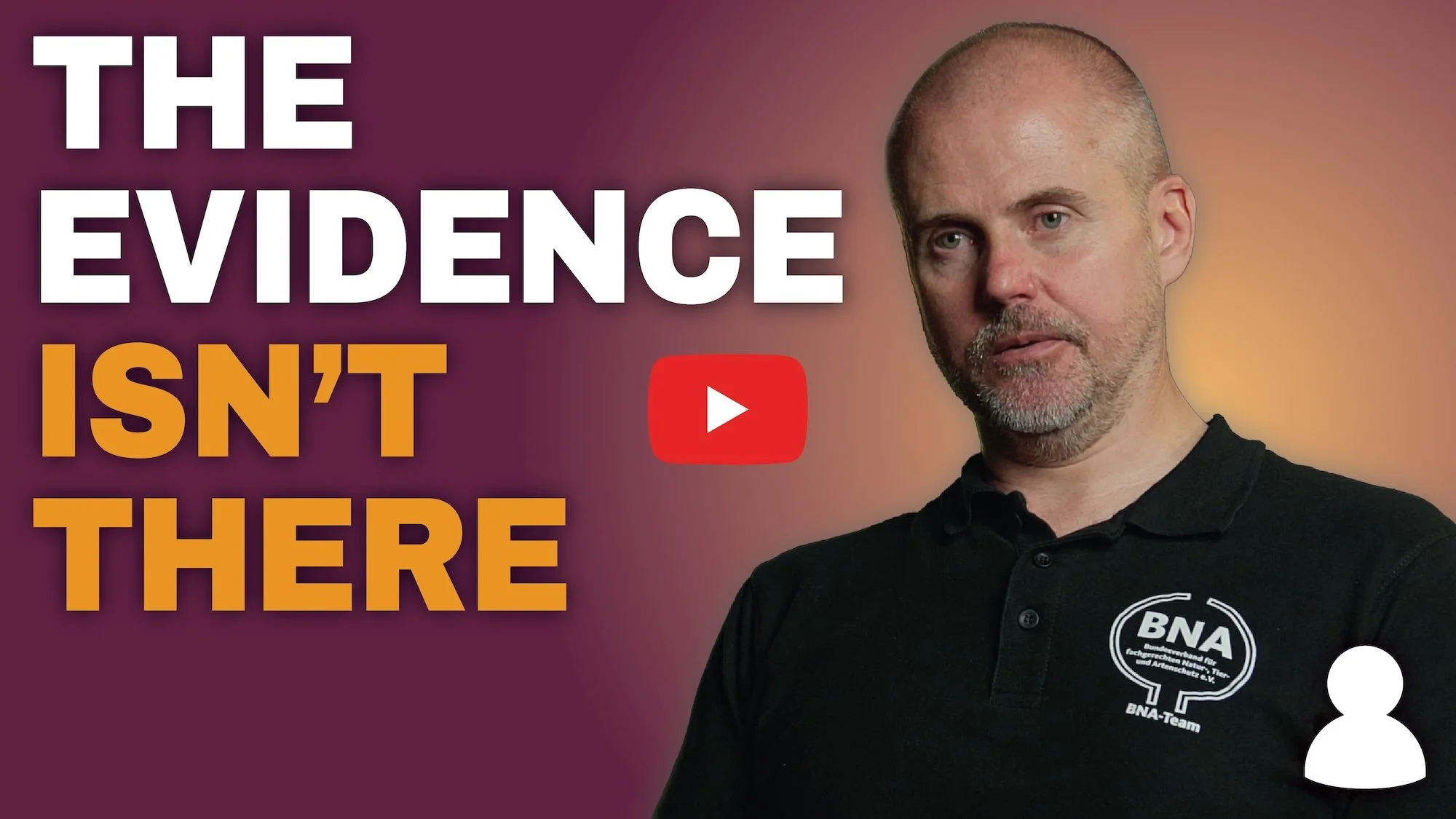
Dr Martin Singheiser is a biologist and the Managing Director of BNA, an organisation that advises German and European pet-keeping policymakers. In an interview with RRK, he outlined the failures of positive-list policies and recommended more effective ways to address animal welfare and conservation. The interview is essential viewing for anyone who wants to understand the science behind why positive-list policies do not work. It can be found on our website and on any of our social media channels.
Positive-list petition
Alongside RRK’s media and campaigning to prevent positive lists, we also launched our positive-list petition, gathering signatures worldwide from those who oppose such draconian legislation. You can find the petition here, as well as on the RRK website and our social media platforms.
If you haven’t yet signed it, please do so right now.

Protect your pets
Say NO to harmful positive lists
Content production
We already mentioned that we've produced a wide range of media content focused on preventing positive lists, including:
Eurogroup for Animals misinformation rebuttal
A comprehensive article on why positive lists don't work
Don’t Pet Me documentary film
Norway campaign videos
Sweden campaign video
Interview with Dr Martin Singheiser of BNA
In addition, we also produced a wealth of content focusing on other responsible pet-care topics.
Extreme breeds
Our video and interview examining extreme breeds was produced in partnership with the German pet-advocacy organisation ZZF, and featured Dr Stefan Hetz, one of the world’s leading authorities on the subject. The film highlighted the commitment of pet traders and keepers to self-regulate by addressing issues as they arise, and it was translated and broadcast in several European languages.
While we're on this topic, look out for our video podcast and release later this year, featuring Charles Thompson from REPTA. In it, we discuss REPTA’s deleterious genes policy and the support it has received from across the pet-keeping sector.


Pet Know How
Working in collaboration with The Pet Charity, RRK produced a series of videos outlining the charity’s new pet-welfare tool. Called ‘Pet Know How’, the platform provides useful information to prospective pet owners to inform their pet-keeping choices, before offering a short quiz to ensure they have absorbed the information they need. A subsequent ‘certificate’ provides reassurance to pet stores and breeders that the customer has done their research, helping to ensure the business is compliant with their licensing conditions.
We’re proud to play a part in promoting this fabulous project, demonstrating the responsible, self-regulatory approach of the pet sector.

Healthy Trade Institute (HTI)
RRK proudly supports the Healthy Trade Institute’s initiative to identify and contain Chytrid and Bsal infections. Successfully operational with major US wholesalers and retailers, the project is now expanding into Europe. HTI’s science-based certification proves that the reptile and amphibian trade can proactively self-regulate, protecting both pets and wildlife. This ground-breaking work exemplifies the ethics and passion of our community. By championing biosecurity over blanket bans, HTI ensures a sustainable future for herpetoculture. We encourage all stakeholders to follow the link and join this vital mission.

What reptiles mean to me
The rewards of reptile keeping are clear to us as enthusiasts, but perhaps less so to those yet to be introduced. That’s why we embarked on broadcasting a series of mini-documentaries and interviews with keepers and breeders. In the films they tell us why they keep their animals, and what it means for their health and emotional wellbeing.
The films are genuinely moving, and the RRK team also found them compellingly motivating, driving us on in our mission to protect and support responsible reptile keepers. Thank you to everyone who agreed to appear in these films – your stories touched our hearts.
RRK explainer
On the subject of content, we should also mention RRK’s latest explainer video that you can find on our website. In it, we explain our goals and motivations for the organisation. We hope it empowers you to join our mission and support our work.

Spreading the message
Podcasts
Tony has been a popular podcast guest almost since launch, and this continued into 2025, with a growing international reach. Below are the 2025 podcasts he appeared on.
Magazines
Although print media is not as popular as it once was, there’s still a significant niche for hard copy magazines in specialist sectors such as the pet sector. So, we’re really pleased to have the chance to spread the RRK mission via these well-regarded publications.
The ZZF feature discusses the importance of influencing the narrative regarding reptile and exotic pet keeping as a means to neutralise the rhetoric emanating from animal-rights ideology, while the PBW feature focuses on the threat from positive lists to the UK and European markets – and beyond
Expos and events
2025 marked the first year RRK attended herp expos as an exhibitor. It's proved to be a worthwhile endeavour, delivering the organisation's profile and mission to new faces in the community. Attending these events is time-consuming and costly, so we’re enormously thankful to the organisers and societies that helped fund our attendance. A special mention to our Canadian supporters, who continue to fly the RRK flag at events that Tony cannot attend in person.
In addition, we also attended a handful of reptile-store open days, where time and distance allowed. It’s great to meet our supporters in person, and, at one event, we had the opportunity to film a promotional video for the Worldwide Reptile Super Survey with Mark O’Shea.
Here’s where we went in 2025:
North American Reptile Breeders Conference – Tinley Park IL, USA
International Herpetological Society show – Blackpool, UK
Western Canadian Reptile Expo – Calgary, Canada
KBN Reptiles – Coventry, UK
Conferences
It’s a huge honour to be invited by prestigious organisations to present at events and conferences. RRK’s mission to broadcast information and education dovetails exceptionally well with these organisations, whose mandate is to inform and educate policymakers and stakeholders.
Public opinion and campaigning sit upstream of new legislation, so the 'court of public opinion' must be informed by well-evidenced media. Presenting at these events allows us to meet key figures within the pet trade, build new relationships, attract support and, most importantly, speak about the critical role that messaging and media play in the policymaking process. We are grateful to the organisations which funded our attendance at these events.
Where we presented in 2025:
Swedish Herpetological Society AGM in Gothenburg, Sweden
Norwegian Herpetological Society AGM in Oslo, Norway
ZoorfExpo and pet-trade conference in Stockholm, Sweden
Other stuff we did
A lot of work goes on behind the scenes at RRK HQ, optimising engagement, adding resources, expanding our reach, keeping in touch with our members, and much more besides. Indeed, it’s difficult to know what to include in this section, so we’ve distilled it to just the most important highlights.
Worldwide Reptile Super Survey
The UK is blessed with reptile-keeping data, thanks to a couple of survey datasets and a selection of other evidence sources that give us a good overview of the reptile sector. This information helps inform RRK’s content, so you can imagine our frustration when we realised that similar detail was not available from other countries.
That’s why we were compelled to launch the Worldwide Reptile Super Survey, creating the largest dataset for the international reptile sector. Supported by industry giants, such as Arcadia, Exo Terra and Zoo Med, the initiative attracted 7,650 responses from 74 countries, highlighting 140,566 specimens being kept from 1,367 species. It has been an enormous undertaking, and an incredibly valuable one.
We’re currently crunching the numbers and preparing the media outputs, so watch this space for more information over the next few weeks.
Translations
As an internationally active organisation, we are acutely aware of the challenges this brings, most notably the language barrier. We always knew we needed to produce multilingual content, but initially, we lacked the resources to do so consistently.
That changed, to some extent, with the relatively recent advances in AI. As a result, we have been able to translate RRK videos and articles into 12 different languages.
The process has not been easy. Translating our extensive back catalogue was time-consuming and complex, as is translating each new piece of content. Every translation requires a language-specific thumbnail and description, before being added to the country's dedicated page on the RRK website.
The workload has been enormous, and we're genuinely proud to have reached this point. Translating new content is now a standard part of our content production process, and these resources significantly expand our reach and influence.


Website resources
Finally, we come to two additional website resources introduced in 2025. The first is a listing of worldwide pet-advocacy organisations – those who work tirelessly to protect and support our sector. Much of their work happens quietly behind the scenes, but without it, our community and the wider sector would not exist in any meaningful form. We owe these organisations a great debt, and we strongly encourage every business stakeholder reading this to support their national body. To that end, we also produced a promotional video urging people to do exactly that.
Similarly, we created an online directory listing worldwide herpetological societies. These organisations store an enormously valuable wealth of specialist knowledge, with members pioneering new welfare, husbandry and breeding innovations. Again, these organisations deserve our support, so we created a promotional video for our socials, urging keepers to join their local club or society and get involved.


What’s next?
The positive-list issue is not going away, not yet. Advocacy organisations worldwide are fighting this deeply flawed legislation wherever it emerges, and RRK is working relentlessly to ensure stakeholders understand the real and lasting damage these laws cause to animals, keepers and the wider sector. Our goal is to stop positive lists early, before ideologically extreme anti-pet campaigners are able to misinform and sway policymakers.
We are determined to halt this process before the legislative machinery grinds into motion, because once it does, the consequences are far harder to undo. As we often say, the best time to deal with a problem is when it is small – before it becomes a monster.
This year, we also want to place greater emphasis on the benefits of keeping and breeding pets. Our experience in government working groups and consultations is that pet keeping is almost always framed as a problem, with little recognition of the substantial benefits it brings to human health, the economy and, importantly, to the animals themselves. We intend to challenge and fix that.
And finally, 2026 is the year we focus on growing our membership. The RRK mission has gained momentum and support organically, with little direct focus on pursuing membership growth. This year, we aim to attract more members while strengthening our existing community, thus amplifying the collective voice behind the RRK mission. There is a lot of work ahead, and with your support, we can make it happen.
Ultimately, we’re acutely aware that none of this can be achieved without you – our members and supporters. Your encouragement, memberships, donations, and willingness to stand up for what you love are what make our work possible.
You are the reason this movement has a voice, and why we will continue to champion responsible keepers everywhere, right into 2026 and beyond.
So, from all of us at RRK, thank you.
Thanks for an amazing 2025. And with your support, we can make 2026 even better!